Last updated November 25, 2026







Free written scope consultation - allowances, timeline, and change-order rules on paper before a single trade is scheduled
DIY vs Professional Construction: The Rancho Cordova Homeowner’s Decision Guide
Installing a luxury vinyl plank floor yourself is legal, doable, and often keeps the manufacturer’s warranty intact. Running your own new electrical circuit to a kitchen island in California is a different category of decision entirely. The gap between those two projects is where most homeowners get into trouble, because both feel like “a project” on a Saturday morning and only one of them can cost you thousands to undo. This guide walks through where the real line sits in Rancho Cordova: which work the law lets you pull a permit for, which work voids a material warranty when you self-install, and how to judge your own skill honestly before you rent a tool.
Quick Answer
The line between safe DIY and hire-a-pro work in Rancho Cordova comes down to three things: legal permit requirements, manufacturer warranty conditions on the materials, and whether rough work will pass inspection. Cosmetic and surface work (paint, tile, flooring, trim) is often a fair DIY project for a careful homeowner. Electrical, plumbing, and gas work almost always require a licensed contractor in California, no matter who pulls the permit. If your project touches a wet wall, a panel, or a structural member, get an estimate before you lift a tool.
Styles & brands we work with
- Kitchen remodeling
- Bathroom remodeling
- Home additions & ADU
- Roofing
- Windows & doors
- Driveway & pavers
- Fence
Table of Contents
- What California law says about permits and DIY work
- Which trades require a licensed contractor in California
- Projects where DIY can void a manufacturer warranty
- A skill and tool self-assessment for Rancho Cordova homeowners
- What DIY on one phase does to a multi-phase remodel
- Inspection scenarios where DIY rough work gets rejected
- Doing the real math on DIY vs professional construction
- Rancho Cordova climate and housing notes that affect the decision
What California law says about permits and DIY work
California lets a homeowner pull a permit for work on a home they actually live in. That’s true and it’s useful for a real DIYer. What surprises people is the second half of the rule: the homeowner permit only covers work the owner is legally allowed to perform. It does not convert electrical, plumbing, or mechanical work into something an unlicensed person can legally do.
Two permit paths exist, and they carry different risk:
- Homeowner-pulled permit. The homeowner is the “contractor of record.” That means the homeowner is responsible for code compliance, inspection scheduling, and any rework the inspector orders. If you sell the house and a buyer’s inspector finds unpermitted work, the liability sits with you, not with a contractor.
- Contractor-pulled permit. The licensed professional holds the permit and is on the hook for passing inspection. This matters most on projects that involve structural changes, new circuits, or plumbing relocations, because the contractor’s license is tied to the outcome.
For a Rancho Cordova remodel, the permit question usually comes up the moment a project touches walls. Moving a kitchen wall, adding a bathroom, converting a garage, or building a detached accessory structure all trigger plan review through the city. The city’s building department is the authority on what your specific project needs, so call them early. A five-minute phone conversation before you start saves weeks later.
Where homeowners get into trouble is assuming “I pulled the permit” means “I’m covered.” It doesn’t. It means you own the compliance risk on a project you may not fully understand. If you want to check what a licensed path looks like on a full-project scope, our Remodeling Rancho Cordova page walks through how a multi-phase job is sequenced from permit to walkthrough.
Which trades require a licensed contractor in California
California’s licensing rules are stricter than many homeowners assume. The state treats certain trades as too risky for unlicensed hands, and that applies regardless of whether the homeowner has a valid permit. If the work falls into one of these categories, plan on a licensed contractor:
- Electrical. New circuits, panel upgrades, subpanels, and any wiring that gets buried behind drywall fall under electrical code. This is where unpermitted DIY shows up fastest in a home inspection. Even small jobs like adding an outlet to a kitchen island involve load calculations and code requirements most homeowners don’t have the training to meet.
- Plumbing. Moving drains, relocating supply lines, installing new fixtures on relocated rough-in, and gas line work for ranges and water heaters. Gas work in particular requires a licensed contractor in California.
- HVAC and mechanical. Ductwork modifications, new equipment installs, and any mechanical work that ties into the home’s envelope or ventilation.
- Structural work. Removing or modifying load-bearing walls, adding beams, foundation work, and any framing that required engineering on the permit drawings.
Electrically, plumbing, and mechanically, the safest read is this: if the work requires an inspection to check something that can hurt you or the next owner, it’s not a homeowner job. We’ve seen how expensive it gets when an inspector catches a shortcut behind drywall, because the repair means opening the wall back up.
What’s left for a confident homeowner? Paint, tile, trim, flooring installation over a sound subfloor, cabinet hardware, and basic landscaping. Those are real projects with real skill requirements, but a mistake costs a material, not a health or safety risk. Kitchen and bathroom work is where the line gets blurry, because cosmetic and code-driven tasks get bundled into one project. Our kitchen remodeling guide breaks down which phases need a permit and which phases don’t.
Projects where DIY can void a manufacturer warranty
This is the part homeowners miss most often. A material warranty is a contract between you and the manufacturer, and most of them carry an installation requirement. If the product isn’t installed to the manufacturer’s published spec, or by a qualified installer in some cases, the warranty can be reduced or voided entirely. You bought premium material and then gave up the backup that came with it.
The three categories where this bites hardest:
- Flooring. Luxury vinyl plank, engineered hardwood, and laminate all have specific subfloor flatness requirements, moisture thresholds, and expansion gap rules. Install over a subfloor that’s out of tolerance and the planks will lift or gap within a season. Most manufacturers list the flatness spec in writing and require it be met before install. We’ve pulled up more self-installed flooring than any other material, and the fix isn’t the plank, it’s the subfloor that was never prepped.
- Roofing. Shingle warranties depend on proper underlayment, nailing pattern, ventilation, and flashing detail. A GAF or CertainTeed shingle installed without the correct underlayment system can lose coverage on the very failure you bought the warranty for. Roof work also involves height and fall risk that makes the DIY decision easy to get wrong.
- Waterproofing systems. Bathroom and shower waterproofing is the category where DIY savings evaporate fastest. A tile shower looks fine on day one and leaks on day 400. Manufacturers of bonded waterproofing membranes publish very specific installation sequences, and any deviation is grounds to deny a claim. When the ceiling below the shower shows a water stain, the rework cost is the whole shower, not the membrane.
Product selection matters here too. Premium materials from names like James Hardie or KraftMaid come with detailed installation documentation, and honoring that documentation is what preserves the warranty. If you want to know how a specific product installation is handled in your home, our bathroom remodeling page covers the waterproofing and fixture side in detail.
A skill and tool self-assessment for Rancho Cordova homeowners
Be honest with yourself about three things before you start: your hands-on experience with this specific material, the tools you own or can rent, and how much time you realistically have. A project that takes a pro a week will usually take a first-timer two to three times as long, and that gap is where the cost savings shrink toward zero.
Run through this checklist:
- Have you done this exact job before? Watching videos is not the same as having done it. If the answer is no and the job involves water or electricity, hire out.
- Do you own or can you rent the right tools? Tile saw, wet saw, floor roller, oscillating multi-tool, laser level. Rental costs add up and can eat the savings on a small project.
- Does the work need to look factory-finished? Tile alignment and paint edges are judged visually. If imperfect lines will bother you for years, budget for a pro.
- What’s the maximum cost if you get it wrong? A botched paint job costs a repaint. A botched shower pan costs the shower, the ceiling below it, and possibly the subfloor. Compare your potential loss to the pro’s estimate, not just to your projected savings.
- Is this a project you’ll finish? Half-finished projects are the most expensive kind, because a pro has to charge to undo and redo.
In our experience, homeowners in Rancho Cordova who do well self-installing are usually tackling one contained cosmetic task in one room, on a job they’ve done before or a close cousin of it. The projects that go badly are the ones that start cosmetic and grow into code work.
What DIY on one phase does to a multi-phase remodel
Multi-phase remodels are where the DIY decision is most misunderstood. If you’re doing a full kitchen remodel that touches electrical, plumbing, cabinetry, countertops, flooring, and paint, the phases are not independent. They’re sequenced. And a licensed contractor working next to a homeowner on adjacent phases creates liability problems that neither party expected.
Here’s what goes wrong, described in general terms because it happens in every version of the same project:
- Sequencing breaks. Flooring has to go in after electrical and plumbing rough-in but before cabinets and countertops. A homeowner finishing paint a week late pushes every subsequent phase back, and scheduling a separate specialist twice costs more than his original bid.
- Warranty becomes ambiguous. If a contractor installs the cabinet and the homeowner handles the countertop template and install, and the seam fails, neither side can cleanly attribute the failure. The contractor will usually decline to warrant work he didn’t touch, which is fair but unhelpful.
- Inspection liability splits. If your contractor pulls the permit for the whole job and the homeowner does a self-installed portion, the contractor is now responsible for passing inspection on work he didn’t do. Contractors handle this two ways: refuse the job, or require that they perform the whole scope.
- Damage responsibility gets muddy. When the homeowner’s tile work leaks and damages the contractor’s new cabinets, who pays? The homeowner, in most contracts. That’s a very expensive answer.
The better pattern for a multi-phase job is to assign each phase of the work entirely. Either a licensed pro takes the whole scope, or the homeowner takes a clearly separate scope (painting the garage, laying flooring in a bedroom) that doesn’t touch the pro’s permit. Our home remodeling guide covers how a mixed-scope project gets structured when the homeowner wants to keep some work in-house.
One place homeowners make a good call on the split: detached accessory structures. A prefab ADU or a shed from a manufacturer is a product with its own install documentation. Reviewing how Abodu, Dvele, Mighty Buildings, Boxabl, or Tuff Shed handle their installs is a reasonable project to handle as an owner-builder, with a licensed contractor brought in for the utility connections. That’s a genuine split, not a mixed phase.
Inspection scenarios where DIY rough work gets rejected
Inspectors in Rancho Cordova see a lot of owner-built work, and there are recurring failure points. What makes each one expensive is that rejecting rough work usually means opening a finished surface back up, so the rework cost exceeds what the original bid would have been.
- Electrical rough-in inside a new wall. Inspector sees exposed wire, unprotected cable, or missing staples. Wall gets opened, work is redone, wall gets patched and painted twice. That’s the rework cost.
- Plumbing drain slope behind a tub surround. Slope out of spec, or venting wrong. Tile surround comes off to fix it. The tile, backer board, and waterproofing all get replaced.
- Structural header installed without spec. If the permit drawings called for a specific beam size or connection and the homeowner substituted, the inspector flags it. Opening the wall and redoing the framing is the fix.
- Waterproofing membrane on a shower with wrong corners or seams. Inspector wants a flood test, and the test fails. Full re-tile at the homeowner’s cost.
- Garage conversion with wrong fire separation between the garage and the living space. The drywall spec is specific, and any deviation means redoing the wall assembly.
The pattern is consistent: the inspection failure is the easy part. The rework of finished surfaces is what does the damage. A professional bid would have covered a correct first-time install. The rework bill covers a correct install plus the demo of the wrong one, which is why the DIY savings turn into a loss.
Doing the real math on DIY vs professional construction
The honest math isn’t savings vs. pro bid. It’s total risk-adjusted cost vs. pro bid. Compare the two like this:
- DIY true cost. Materials, plus tool purchase or rental, plus your time valued at what an hour of your weekend is worth, plus the probability-weighted cost of a rework (project the worst-case repair, then multiply by how likely that is), plus any warranty value you gave up.
- Pro true cost. Written estimate, plus the time you don’t have to spend learning a new trade, plus warranty coverage on the installation and the material, plus one party responsible if something goes wrong.
On paint, the pro usually wins on speed and quality, but a careful homeowner can close the gap with enough time. On flooring, the DIY math can genuinely work in favor, provided the subfloor is within spec and the warranty allows installation by the owner. On anything with water or electricity, the risk-weighted number goes to the pro nearly every time, because the tail risk on those failures is not proportional to the savings.
Two cost-math factors specific to Rancho Cordova’s market: the home inventory spans several decades of construction, so a wall opened during any remodel can reveal old work that needs updating regardless of who is doing the new work, and the city’s inspection schedule means a DIY rework costs weeks, not days, of project time. Factor both into the comparison.
Rancho Cordova climate and housing notes that affect the decision
Rancho Cordova winters are mild, and that has a specific effect on which DIY projects go wrong here and which don’t. The projects that fail aren’t the ones that fail because of temperature swings, they’re the ones that fail from moisture control mistakes.
Bathroom and shower waterproofing fails here because the enclosure gets used daily and the membrane takes wear year-round, not just in extreme weather. Flooring installation over a slab or over a subfloor that got damp in a plumbing leak or a window leak will fail on a schedule the homeowner can’t see in advance. Exterior paint is a fair-weather project in this climate, and a careful homeowner who preps properly can do it well. Interior paint even more so. Roof work and siding installation need the correct substrate and flashing detail independent of climate, and both carry height risk that shouldn’t be discounted.
Housing stock matters as much as climate. Rancho Cordova includes neighborhoods built across a wide range of decades, and a home built in one era has very different rough-in from one built a generation later. Older homes in some of the neighborhoods may have had prior owner work layered behind the walls, which a professional will find and account for but a first-time DIYer may not recognize. That unknown is a real risk multiplier on any project that opens a wall, and it’s worth asking about directly in the estimate conversation.
Common Mistakes to Avoid
- Pulling a homeowner permit on electrical or plumbing work. The permit is legal; the work isn’t, unless a licensed contractor is performing it. Combining the two is how a homeowner ends up with an inspection failure and no recourse.
- Buying premium material without checking the install spec first. A luxury vinyl plank or a waterproofing membrane comes with a written install requirement. Read it before you buy, not after the floor is down.
- Starting a multi-phase remodel while contracting the plumber yourself. Mixed-scope jobs create sequencing problems, damage responsibility ambiguity, and warranty disagreements that could have been avoided with a clean split.
- Assuming the inspection is the pass/fail. The expensive part is the rework of finished surfaces, not the failed inspection itself. Budget for rework time when you go DIY.
- Letting a “quick” cosmetic project grow into a code project. Removing a non-load-bearing wall to open a kitchen feels like demolition. If any wire or pipe runs inside that wall, it’s not a demolition job anymore. Stop and get an estimate.
- Skipping the ask about existing conditions. In Rancho Cordova’s older neighborhoods, a contractor will want to know what’s behind the wall before quoting. A DIYer working blind is guessing on the biggest variable in the project.
- Valuing your time at zero. Time-bound projects stretch to weeks when you’re learning as you go, and the value of your evenings and weekends is part of the real math.
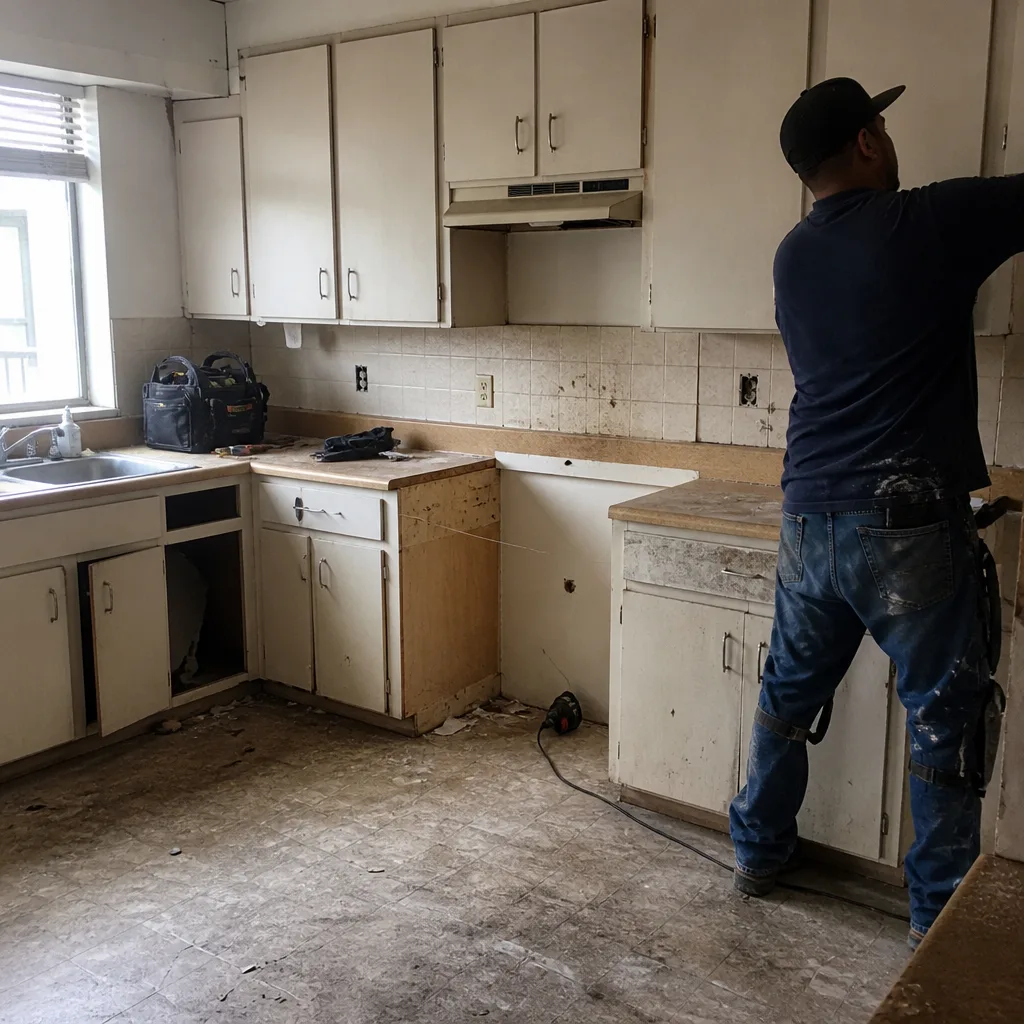
See the difference
 Before
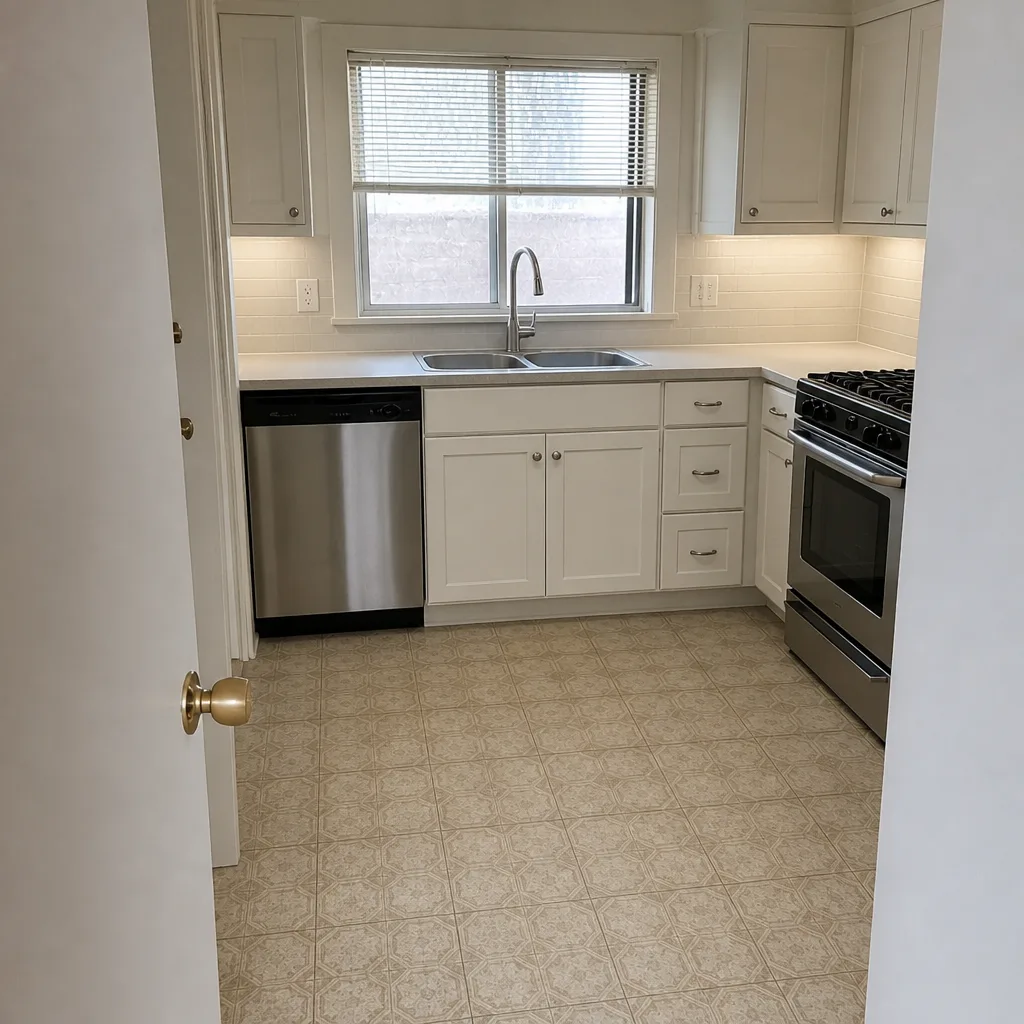 After
 Before
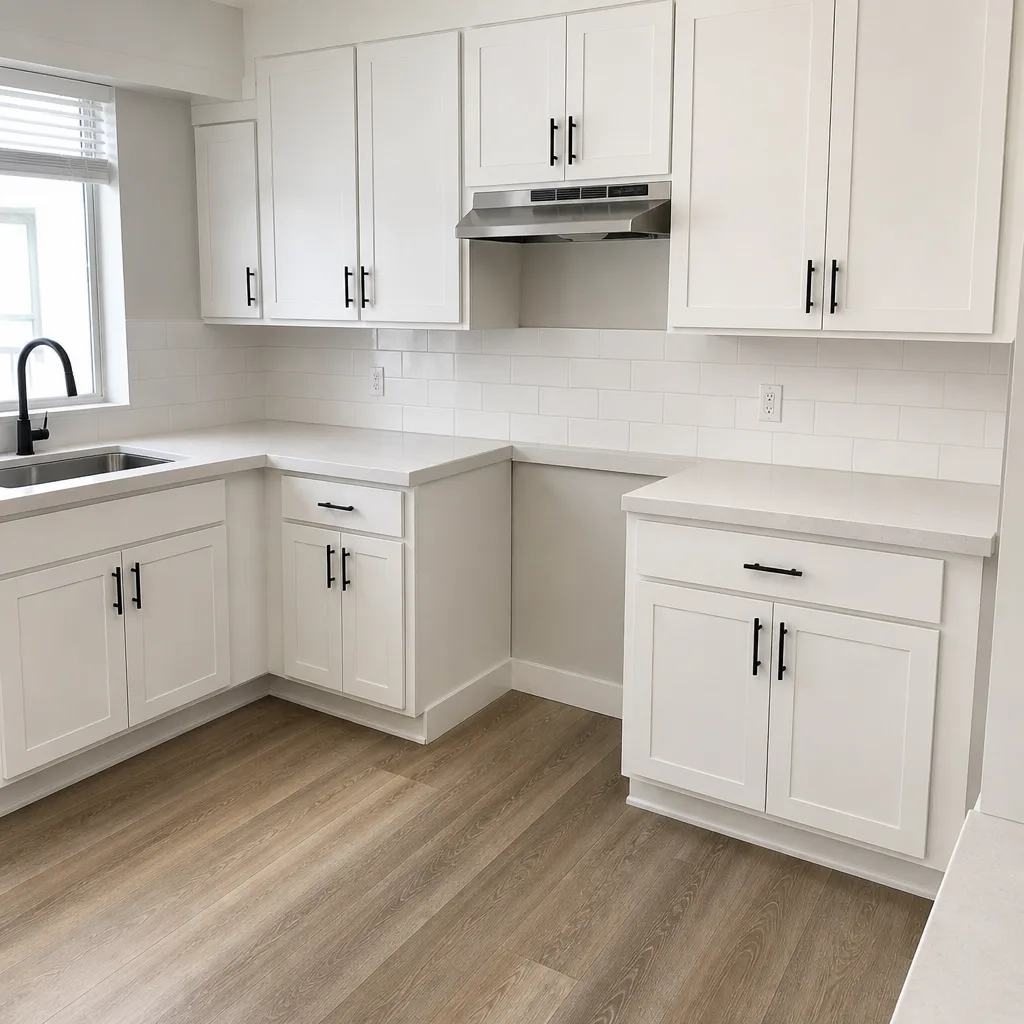 After
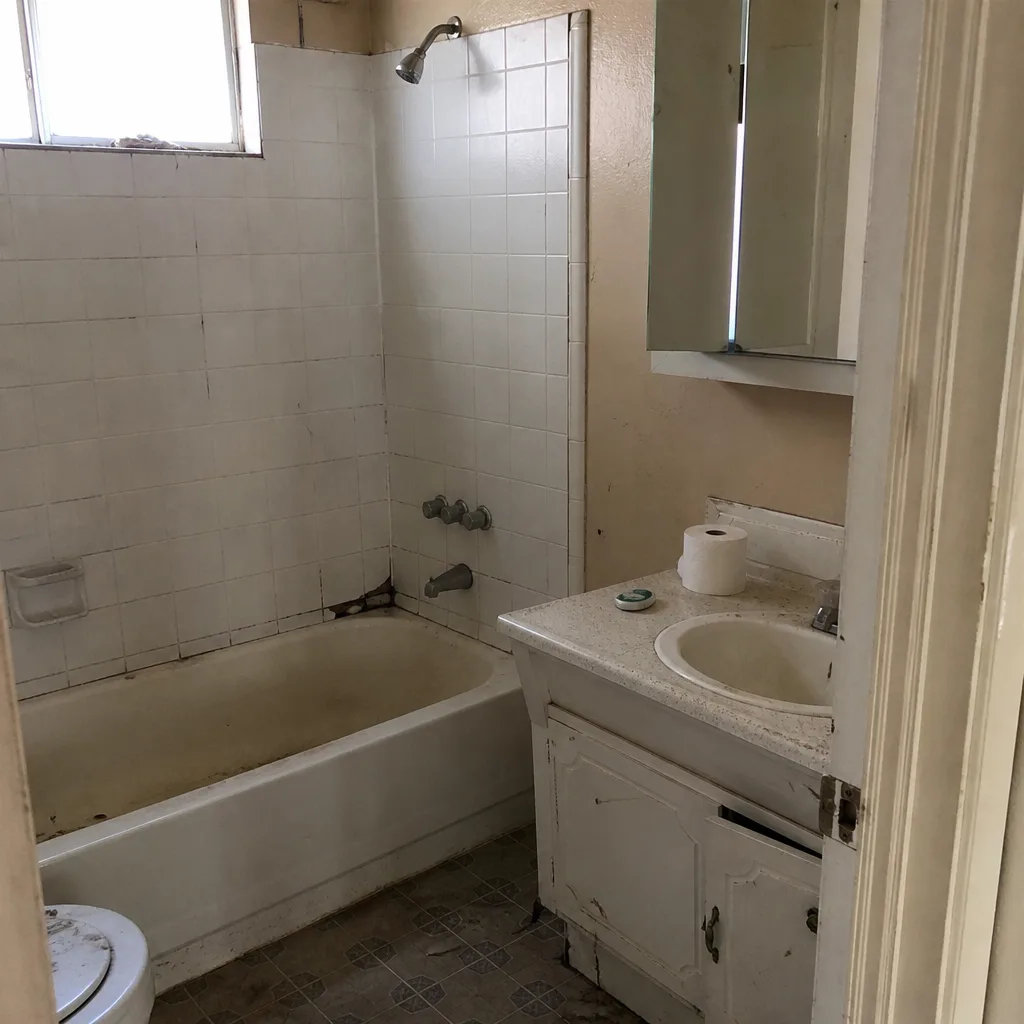 Before
 After
When to Call a Professional
Call a professional if the project touches your electrical panel, moves or adds plumbing, involves gas, alters structural framing, includes waterproofing, or crosses an inspection threshold. Call a professional if the material you’re buying has a warranty condition on install. Call a professional if the project is part of a multi-phase remodel and you want the permit, sequencing, and warranty coverage to be one party’s responsibility. Call a professional if you’d have to teach yourself the trade from scratch on the only bathroom in the house.
Remodeling Rancho Cordova offers free estimates in Rancho Cordova. We work across kitchens, bathrooms, flooring, and painting, with brand-name materials from manufacturers you can research before you commit (KraftMaid and Wellborn cabinetry, Cambria, Silestone, and Caesarstone countertops, Kohler, Moen, Toto, and Grohe fixtures, James Hardie siding, and GAF and CertainTeed roofing among them), plus ADU capability through Abodu, Dvele, Mighty Buildings, and Boxabl. Call (279) 202-9773 to schedule yours. We answer 24/7. Fast dispatch from 7am to 7pm, Sunday through Friday.
Frequently Asked Questions

Yes. California law allows a homeowner to pull a permit for work on a home they live in, and the city’s building department will process a homeowner permit for qualifying work. The permit is not a substitution for licensing on electrical, plumbing, gas, or mechanical work, so treat the permit as a partial answer and confirm the licensing requirement with the city before you start.
It can, depending on the manufacturer’s terms. Most flooring brands require installation to their published spec, sometimes including a specific subfloor moisture level or flatness tolerance. If the install deviates from spec, or if the manufacturer’s terms require a qualified installer, the warranty coverage may be reduced or denied. Read the install documentation before you buy, and call (279) 202-9773 for a free estimate if you want to compare the DIY path against a pro install.
Electrical, plumbing, gas, HVAC, and structural work falls into this category. A homeowner permit doesn’t convert an unlicensed owner into a legal installer for those trades. If your project involves any of them, plan on a licensed contractor. That’s the hard line, and it doesn’t move based on skill level.
Cosmetic phases (paint, tile backsplash, cabinet hardware, trim) are fair DIY territory for a careful homeowner. Cabinet installation, countertop fabrication, electrical circuits for new appliances, and plumbing relocation are not. Kitchen remodeling on a typical Rancho Cordova home usually involves at least one licensed-phase item, so plan the scope with that in mind and get an estimate on the pieces you’re not doing yourself.
Inspectors check against code and the approved drawings, not against visual quality. A rough-in that looks clean can still fail on a wire protection detail, a drain slope measurement, a venting configuration, or a missing connection spec. What makes that expensive is the rework of finished surfaces afterward, which is why the total cost on a failed rough-in is usually higher than a professional bid would have been.
Cosmetic tile replacement and interior paint generally don’t require a permit on their own. The moment the tile work is part of a shower rebuild, a fixture relocation, or a wet-wall modification, the plumbing and waterproofing requirements come into play, and those may trigger plan review. If your bathroom project includes a shower rebuild or fixture move, call (279) 202-9773 for a free estimate. Estimates are free, and the written quote sets the final price.
The Bottom Line
The DIY vs professional decision is not a measure of your character or your budget. It’s a measure of which project categories carry legal, warranty, or inspection exposure that makes DIY costly on the downside, not just slower. Cosmetic work is often fair game for a careful homeowner. Code-driven work isn’t, no matter how good the tutorial. In Rancho Cordova, the middle cases (flooring, waterproofing, installations) live or die on the manufacturer’s install spec and the subfloor condition, so read those documents before you buy. When the math gets unclear, get a free estimate. You choose the brand, we handle the build.
Call (279) 202-9773 to schedule your free estimate. We answer 24/7. Fast dispatch from 7am to 7pm, Sunday through Friday.
Written by the team at Remodeling Rancho Cordova.